What Is “Ozempic Face” and How Can You Restore Facial Volume After Weight Loss?
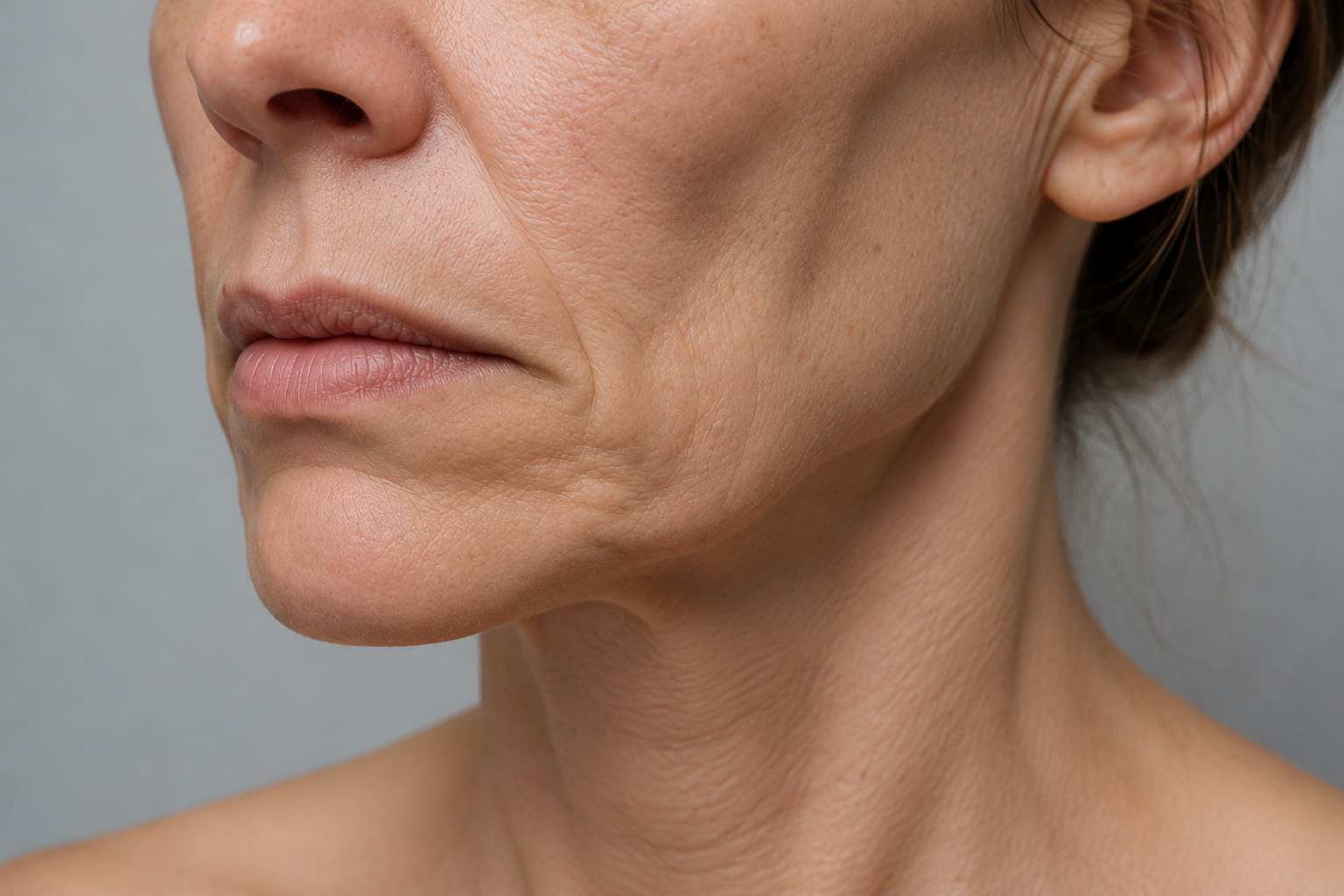
Quick Answer: “Ozempic face” is the hollow, gaunt or prematurely aged look that can follow rapid weight loss on GLP-1 medications such as Ozempic®, Wegovy® and Mounjaro®. It is not caused by the medication itself, but by the loss of the facial fat and support that once gave your face its youthful curves. As a Consultant Plastic and Reconstructive Surgeon, I restore that volume with fat transfer and, where the skin has also descended beyond that which can be restored with fat transfer alone, with a facelift. I undertake both of these procedures myself and consult out of my rooms at Montrose London in Belgravia. No GP referral is required.
Why Does Rapid Weight Loss Change the Face So Noticeably?
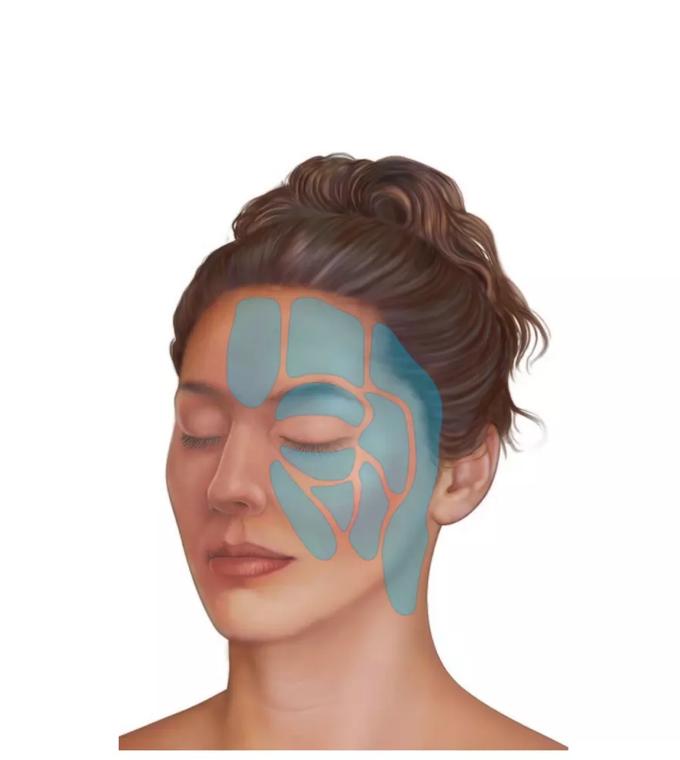
Figure 1. The fat compartments of the face. Adapted from Rohrich RJ, Pessa JE.[¹]
If you have worked hard to lose weight and feel better than ever in your body, only to find your face looking tired, hollow or older than it should, you are not imagining it. It is one of the most common concerns I now see from patients who have used GLP-1 medications.
Your face holds fat in distinct compartments - in the cheeks, temples, around the eyes and the mouth - that quietly support the skin and create soft, youthful contours. When weight falls quickly, these pads shrink faster than the skin can adapt. The result can be hollow temples, flatter cheeks, deeper folds and a generally drawn, fatigued look. The faster and greater the weight loss, the more noticeable the change tends to be.
Gradual weight loss is usually kinder to the face, because the skin has time to recoil. The speed of loss with GLP-1 medications is what tends to exaggerate the effect. Many people using these medications are also at a stage of life when the skin naturally has less elasticity, which is why the changes can appear more pronounced.
What Is “Ozempic Face”?
“Ozempic face” is not a medical diagnosis - it is the popular shorthand for age-accelerating volume loss in the face after rapid weight reduction. The deep facial fat compartments deflate, the overlying skin is left with less to support it, and the face reads as older and more tired than your actual age. Understanding that the change is structural, not superficial, is the key to treating it properly. Creams and surface treatments cannot reach the layer where the problem sits.
How Can Facial Volume Be Restored?
There is rarely a single answer. The right approach depends on whether you have lost only volume, or volume plus skin support. Here is how I think about it.
- Fat transfer (fat grafting) is the most natural and durable option for widespread volume loss. Your own fat is gently harvested, purified and reintroduced into the deflated areas of your face. Because it replaces like with like, the result looks and feels natural, lasts well, and the regenerative cells within the fat can also improve the quality of the overlying skin.
- A deep plane facelift, is what I consider where weight loss has revealed not only volume loss but also meaningful tissue descent and excess skin. It repositions deeper facial structures to restore support rather than simply tightening the surface.
- Dermal fillers have a role for smaller, targeted areas, though the result is temporary and less suited to the widespread loss that follows significant weight change.
In practice, fat transfer and a facelift are frequently combined for a complete, harmonious result. What matters is matching the procedure to your face, which is exactly why this is assessed in person rather than assumed from a photograph.
How I Approach Restoring Facial Volume
My background is in complex microsurgical reconstruction of the head, neck and breast in my NHS practice at Imperial College Healthcare NHS Trust. That reconstructive training shapes how I approach aesthetic work: an eye for natural contour, meticulous technique, and results tailored to your face rather than a template. Every procedure is planned and delivered personally by me, not delegated.
When Is the Right Time for Treatment?
The single most important principle is to be at a stable weight first. Treating the face while you are still actively losing weight gives unpredictable results, because the tissues are still changing. If you are taking a GLP-1 medication, decisions about timing should be made together with your prescribing clinician and discussed at your consultation with me. Never stop or alter your medication on your own to fit a treatment plan.
If you are considering surgery under general anaesthesia or deep sedation, it is best to tell me and the anaesthetic team that you use a GLP-1 or dual GIP/GLP-1 medicine. Current UK guidance supports individualised peri-operative assessment; prescribed medication should not be stopped or changed unless the relevant clinical team advises you to do so.
What Happens During Your Consultation With Me?
Your consultation is unhurried and led by me from start to finish. I will listen to what is troubling you about your face, examine the volume and skin support directly, and talk you through whether fat transfer, a facelift, a combination, or simply waiting for your weight to settle is the right path. If surgery is appropriate, I will write to you afterwards with a clear, itemised quote. There is no pressure and no obligation, and no GP referral is required to see me.
Ready to restore natural volume after weight loss? You can book a consultation with me directly, with no GP referral required.

Dr Georgina Williams
Consultant Plastic, Reconstructive & Aesthetic Surgeon
FRCS (Plast)
Dr Georgina Williams is a Consultant Plastic, Reconstructive & Aesthetic Surgeon FRCS(Plast) practising privately in Belgravia, London SW1X. Alongside her private practice she holds a substantive NHS post at Imperial College Healthcare NHS Trust, specialising in complex microsurgical reconstruction of the head, neck and breast. Every treatment is delivered personally by Dr Williams, not delegated, and no GP referral is required.
Source List
- Rohrich RJ, Pessa JE. The fat compartments of the face: anatomy and clinical implications for cosmetic surgery. Plast Reconstr Surg. 2007;119(7):2219-27.
Frequently Asked Questions
Is “Ozempic face” permanent?
Some fullness can return once your weight stabilises, but the deep facial fat compartments rarely restore themselves completely. For many people, treatment is needed to fully address the change. The first step is simply to have your face assessed once your weight is stable.
Can “Ozempic face” be prevented?
There is no guaranteed way to prevent facial volume change during significant weight loss. A slower, medically supervised weight-loss trajectory may make abrupt facial changes less noticeable for some people, while general nutrition, hydration and skin care support overall health. Do not change the dose or timing of a prescribed GLP-1 medicine for cosmetic reasons without speaking to the clinician who prescribes it.
Is fat transfer better than filler for this?
For the widespread volume loss that follows significant weight loss, fat transfer offers natural, long-lasting restoration and can improve skin quality. Filler is better suited to smaller, targeted areas and gives a temporary result. I will advise which suits your face at your consultation.
Do I need to stop my GLP-1 medication?
Never stop on your own. Decisions about your medication belong with your prescribing clinician, and I will advise on the most suitable timing for any surgery around that. We can plan this together so nothing is rushed.
Will a facelift alone fix “Ozempic face”?
Not always. A facelift restores support where tissues have descended, but if the underlying problem is lost volume, tightening skin over a deflated structure can look unnatural. This is why I often combine a facelift with fat transfer, and why an in-person assessment matters.
How natural will the results look?
Restoring your own facial volume, particularly with your own fat, is designed to look like you - rested and refreshed - rather than altered. My approach prioritises natural contour over an overfilled or pulled appearance.
Is fat transfer to the face safe?
Fat transfer is a well-established technique with a strong safety profile when performed by an experienced surgeon. As with any procedure there are risks, which I will discuss fully and honestly with you before you decide anything.
How long does recovery take?
This depends on whether you have fat transfer alone or combined with a facelift. I will give you a realistic, personalised recovery timeline at your consultation so you can plan around work and life.
How much does treatment cost?
A surgical consultation with me is £350.00, after which I write to you with a quote specific to your procedure. As a guide, facial surgery typically starts from £20,000.00, with the exact figure confirmed in writing after we meet.