
Lower Blepharoplasty
A lower blepharoplasty is a surgical procedure to rejuvenate the under-eye area by addressing bags, hollowing, excess skin, and fine wrinkles beneath the eyes — restoring a refreshed, well-rested appearance.
- Eliminates under-eye bags and puffiness caused by protruding or displaced fat pads
- Corrects hollowing and dark circles through fat repositioning or grafting
- Natural, refreshed results with long-lasting improvement (10+ years)

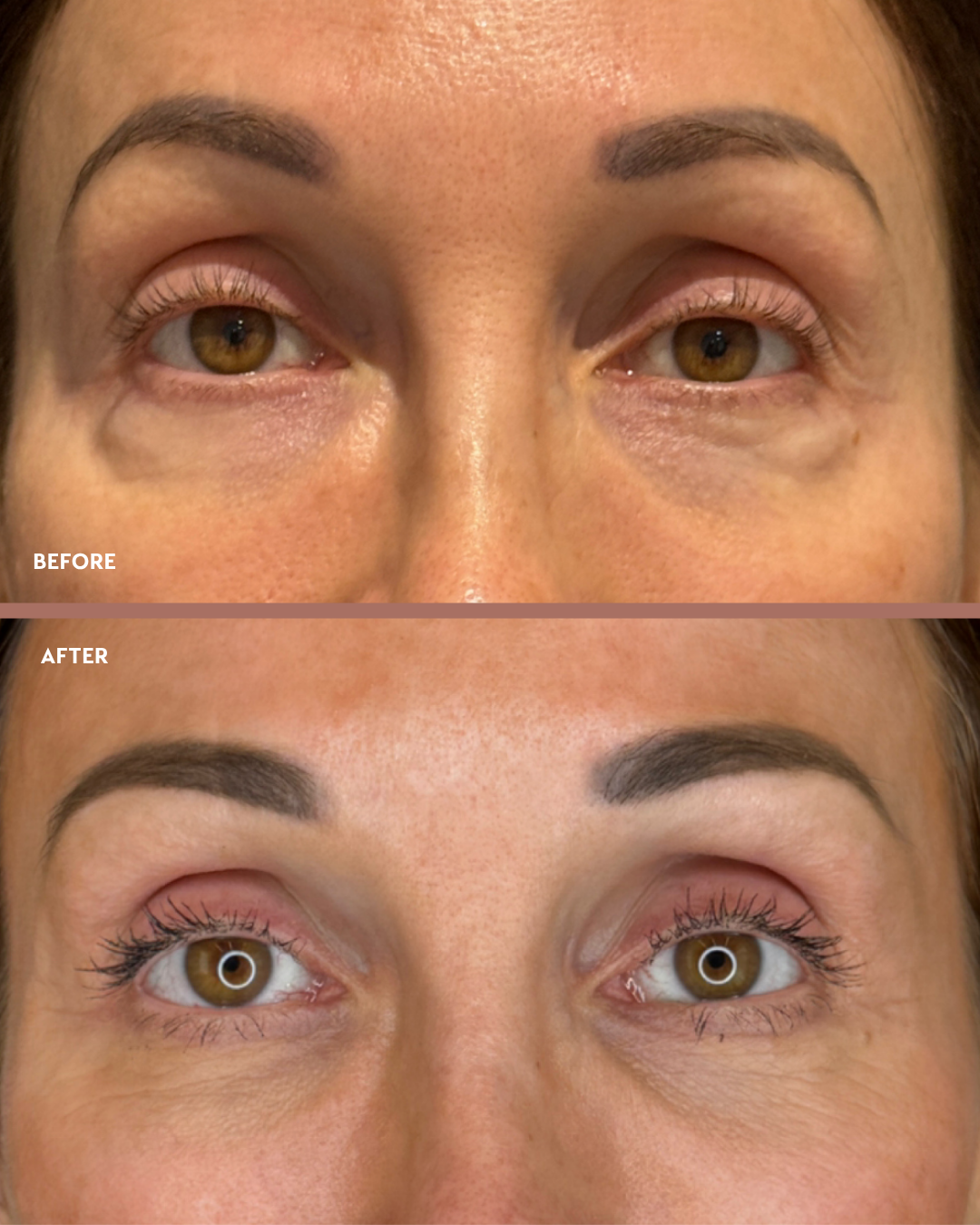
Results
Initial improvement is visible within the first couple of weeks as bruising and swelling subside. Final results settle over 2–3 months as the delicate eyelid tissues heal and the under-eye contour refines. Scars typically do very well - they are "invisible" when a transconjunctival (inside the eyelid) approach is used. Otherwise, incisions under the eyelashes tend to heal very well.
BOOK CONSULTATIONWhat To Expect
PRICE:
Pricing provided following initial consultation
TIME:
2-3 hours
PAIN:
Mild — well managed with simple pain relief
RECOVERY:
Routinely performed as a daycase when performed in isolation. Bruising typically resolves within 2-3 weeks. Most patients return to face-face work within 2-3 weeks
AREAS:
Lower eyelids and anterior cheek
FREQUENCY:
A one-time procedure with results lasting 10+ years
How Does It Work
Lower blepharoplasty is tailored to each patient’s anatomy and goals. Either a transconjunctival approach is used, here, the incision is placed on the inside of the lower eyelid, leaving no visible external scar. Through this incision, excess fat can be removed or, more commonly, repositioned to fill hollows and create a smooth transition between the lower eyelid and cheek. Where excess skin is present, this can be coupled with a "pinch" of skin through an incision just below the lash line, which typically heals very well. Alternatively, a transcutaneous approach may be used, accessing the fat pads through the incision on the outside of the eyelid.
Fat grafting or other volumising techniques may be used to further enhance the under-eye area. Dr Williams’s microsurgical background provides her with an exceptional understanding of the delicate periorbital anatomy required for this procedure.
Frequently Asked Questions
What Are The Benefits?

- Removal or repositioning of fat pads causing under-eye bags and puffiness
- Correction of hollowing and tear trough deformity
- Reduction of fine wrinkles and excess lower eyelid skin
- Restoration of a refreshed, well-rested appearance to the eyes
- Can be combined with upper blepharoplasty for comprehensive eyelid rejuvenation
What complementary treatments are available?
- Upper blepharoplasty — for a complete eyelid rejuvenation
- Brow lift — to address brow descent contributing to a tired appearance
- Fat grafting — to restore volume to the periorbital region
- Facelift — as part of comprehensive facial rejuvenation
- Dermal fillers — for non-surgical enhancement of the tear trough
- Resurfacing laser — often performed at the same time as surgery to improve skin quality
What is the post-treatment advice?
- Use cold compresses regularly and sleep with head elevated
- Apply prescribed ointments to any external incisions
- Avoid heavy lifting, straining, and leaning down for at least 2 weeks
- Eye drops may be prescribed to prevent dryness
- Attend all scheduled follow-up appointments
What are the risks?
Risks include bruising, swelling, temporary dry eyes, chemosis (conjunctival swelling), very rarely haematoma requiring drainage, and changes in lower eyelid position. Choosing an experienced surgeon significantly reduces complication risk. All risks will be discussed during your consultation.
What CAN I EXPECT?
- Initial bruising and swelling that settles rapidly over the first 1–2 weeks
- Progressive improvement in under-eye contour over 2–3 months
- Scars that are virtually invisible (transconjunctival) or hidden below the lash line
- A refreshed, naturally youthful eye area
Who is this treatment unsuitable for?
- Patients with significant lower eyelid laxity (may require additional procedures)
- Those with certain eye conditions — assessed during consultation
- Active smokers (must stop at least 6 weeks preoperatively and 6 weeks postoperatively)
Schedule A Consultation
BOOK CONSULTATION