Facial Fat Grafting
Facial fat grafting (autologous fat transfer) uses your own fat, harvested from the body, to restore volume, offering natural, long-lasting results without synthetic fillers. This can be for global facial rejuvenation and also for specific defects that require filling such as post-traumatic facial fat loss.
- Restores lost facial volume using your own fat as a natural alternative to using filler
- Improves skin quality in treated areas through the regenerative properties of transferred fat
- Long-lasting, natural-feeling results with the added benefit of contouring the donor site
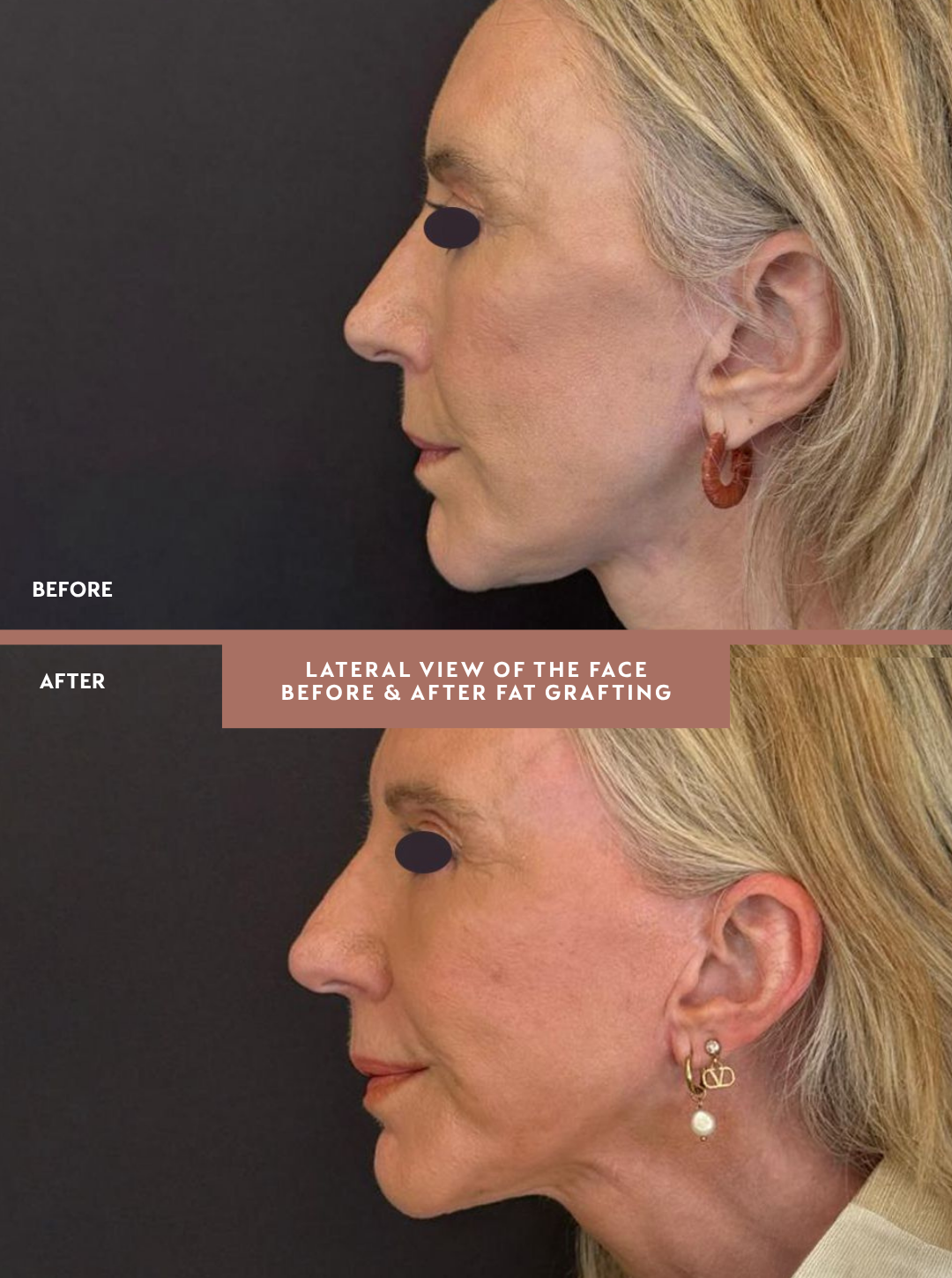
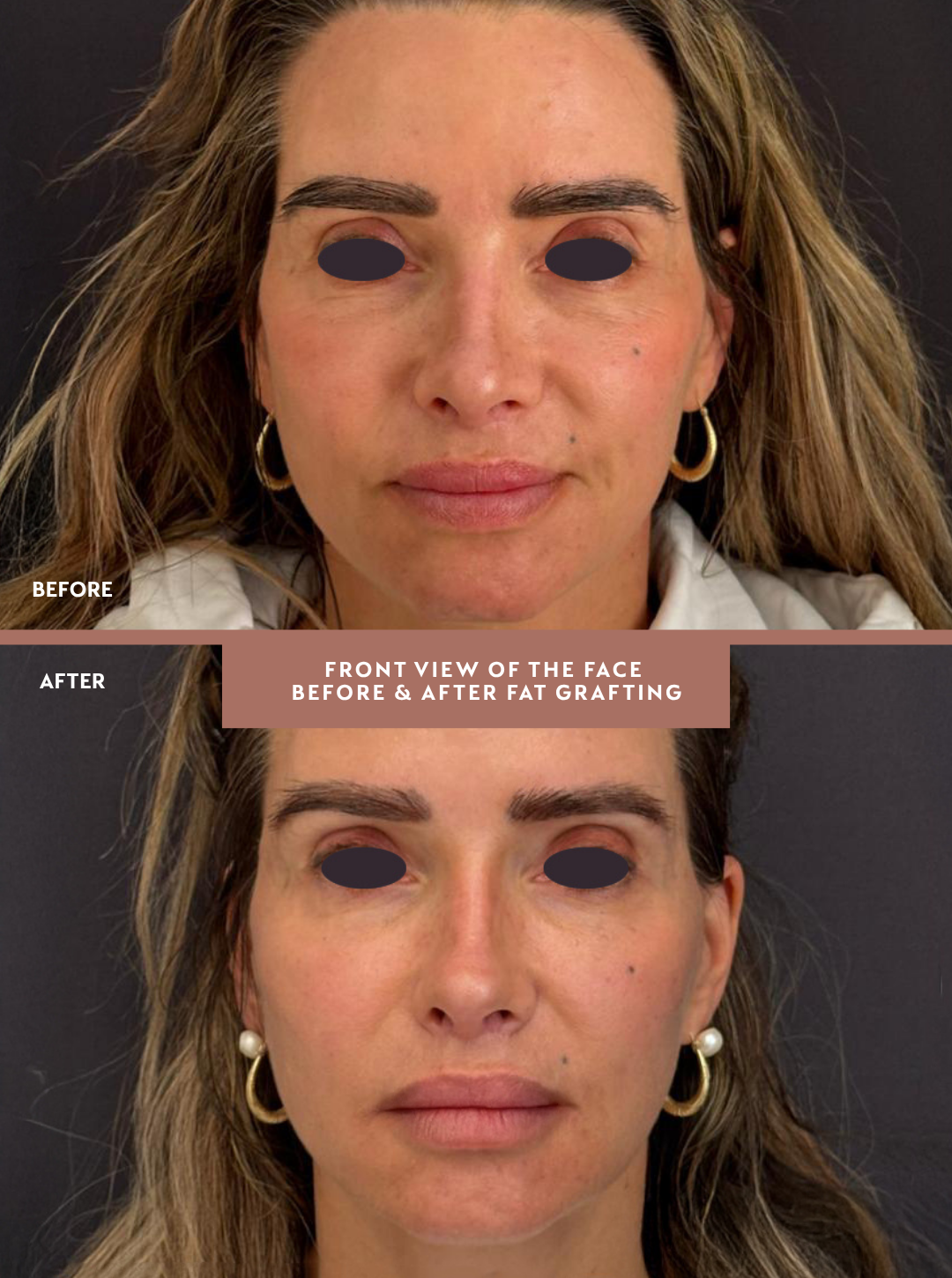
Results
The initial bruising and swelling subside over 2-3 weeks. Between 50-80% of the transferred fat typically survives and the final result is seen at the 2-3 month mark.
BOOK CONSULTATIONWhat To Expect
PRICE:
Pricing provided following initial consultation
TIME:
1–2 hours (longer if combined with other procedures)
PAIN:
Mild to moderate; managed with prescribed pain relief
RECOVERY:
Routinely performed as a day case when performed in isolation. Swelling and bruising typically subside within 2 weeks; most patients return to work within 7–10 days
AREAS:
Cheeks, temples, periorbital region, nasolabial folds, lips, jawline, brow
FREQUENCY:
Often a single procedure; some patients opt for a refinement session
How Does It Work
Fat is harvested from a donor site (typically the abdomen, inner thighs, or flanks) using gentle liposuction through small incisions. The fat is then carefully processed and purified before being precisely injected in small amounts into targeted areas of the face, most commonly the cheeks, temples, periorbital region, nasolabial folds, and lips. Dr Williams’s microsurgical expertise provides her with an exceptional understanding of facial anatomy and tissue handling, allowing her to place fat with precision for natural, lasting results. The procedure can be performed as a standalone treatment or combined with a facelift, blepharoplasty, or other facial procedures.
Frequently Asked Questions
What Are The Benefits?

- Natural volume restoration using your own tissue
- Improved skin quality and texture in treated areas
- Long-lasting results (50–70% of transferred fat survives permanently)
- No risk of allergic reaction (autologous tissue)
- Contouring benefit at the fat donor site
- Can be combined with surgical procedures for comprehensive rejuvenation
What complementary treatments are available?
- Facelift — combined with fat grafting for comprehensive facial rejuvenation
- Blepharoplasty — with periorbital fat grafting to restore volume around the eyes
- Brow lift — with fat grafting to the brow and temple region
- Lip lift — combined with fat transfer for enhanced lip volume and shape
- Dermal fillers — for additional subtle volume where needed
What is the post-treatment advice?
- Sleep with head elevated for the first week
- Avoid strenuous activity for 2–3 weeks
- Do not massage the treated areas in the early healing period
- Attend all scheduled follow-up appointments
What are the risks?
Risks include swelling, bruising, asymmetry, over- or under-correction, fat reabsorption, oil cysts, and infection. At the donor site, risks include bruising, contour irregularity, and discomfort. All risks are discussed during consultation.
What CAN I EXPECT?
- Immediate fullness that settles as swelling resolves
- Some fat reabsorption in the first 3 months is normal
- Final, stable result by 3–6 months
- Natural-feeling volume that ages with you
Who is this treatment unsuitable for?
- Very lean patients with insufficient donor fat
- Patients seeking a temporary or easily reversible treatment (fillers may be more appropriate)
- Active smokers
- Patients with unrealistic expectations about volume retention
Schedule A Consultation
BOOK CONSULTATION