
Brow Lift
Brow lifts describe the effect of various procedures - surgical and non-surgical, to achieve elevation of the eyebrow to a more rejuvenated elevated position and shape. Brow ptosis or drooping can occur as result of aging and or genetics. There are other acquired causes of brow ptosis, such as facial nerve palsy though this is more often one sided, and far less common. Brow ptosis can also contributes to upper eyelid heaviness and hooding of the upper lids that cannot always be corrected by an upper blepharoplasty alone. There is a complex interplay between upper eyelid and brow position that requires unpicking before deciding upon surgery. The type of brow lift(s) that is most appropriate for you is discussed together with your surgeon after a full history, examination and discussion of your goals. The effect of brow lifting is subtle but very impactful and is sometimes performed in isolation, but mostly in combination with other techniques for periorbital rejuvenation including an upper blepharoplasty or a face lift.
- Restores a naturally elevated, youthful brow position and shape
- Opens the eye area and reduces upper eyelid heaviness caused by brow descent
- Subtle yet powerful rejuvenation — often performed alongside blepharoplasty or facelift for comprehensive results
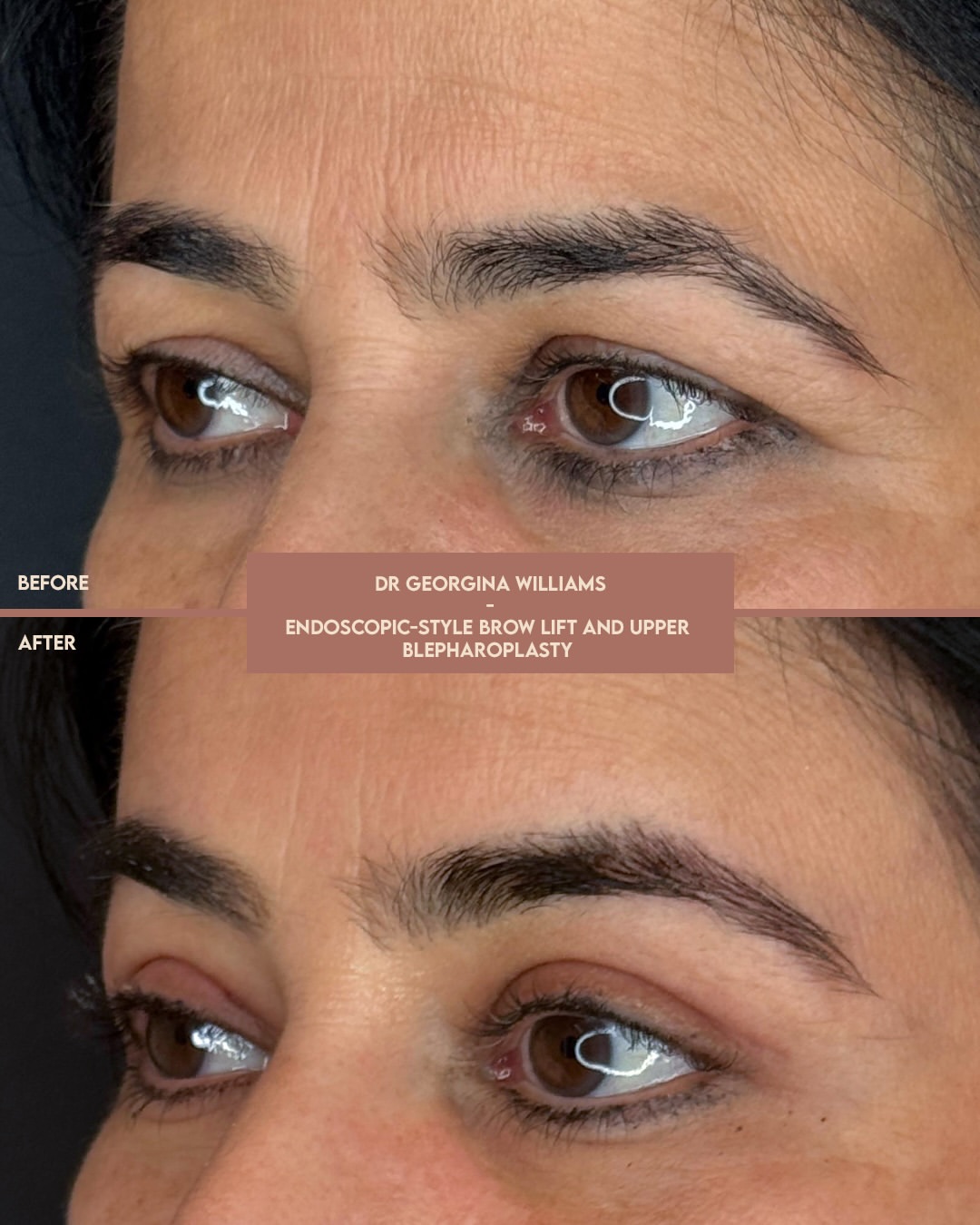
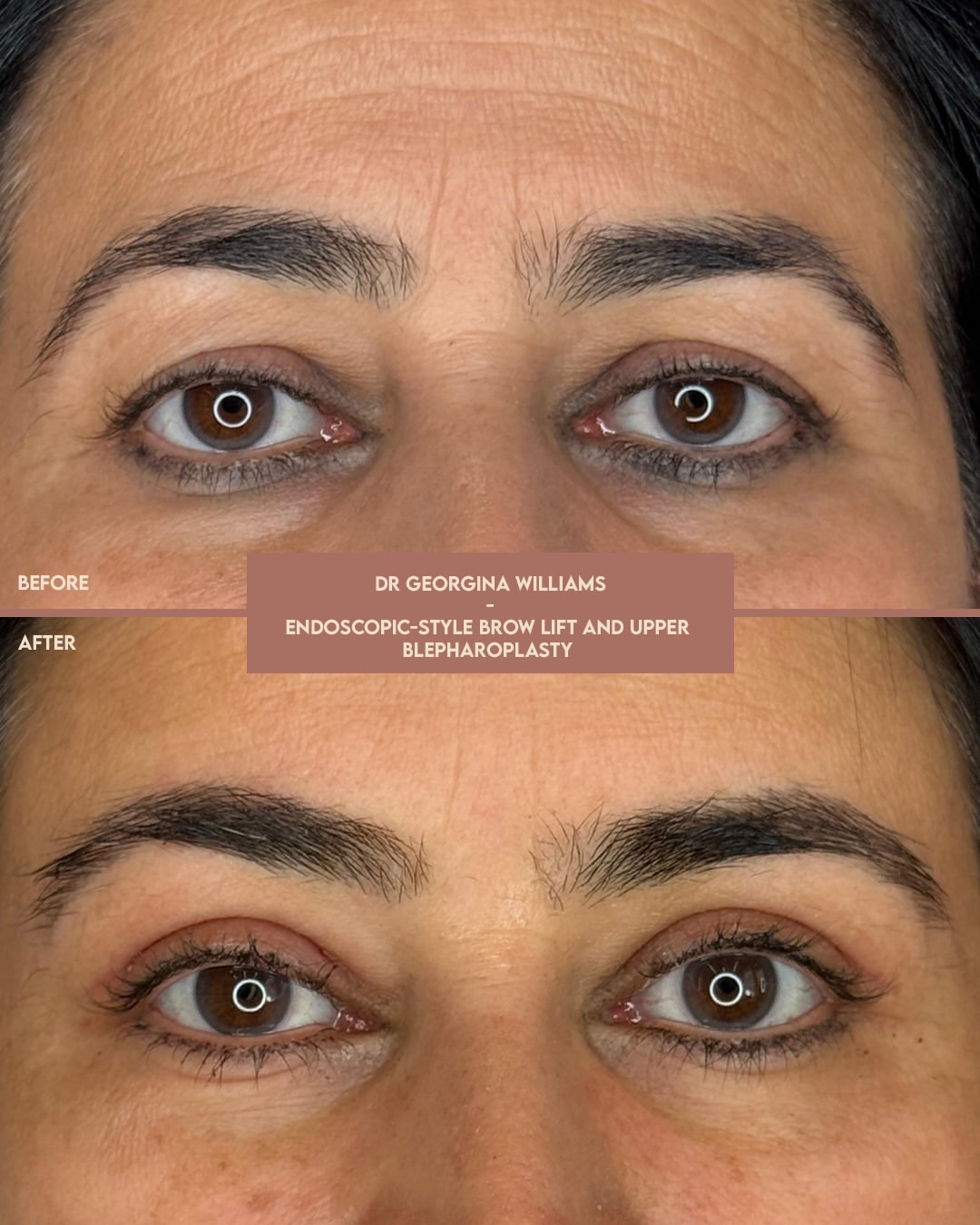
Results
The improved brow position is noticeable immediately. Swelling improves significantly within the first week, and bruising clears within 2–3 weeks. Full results settle by 3–6 months as tissues heal and integrate. An endoscopic brow lift can last 10–15 years.
BOOK CONSULTATIONWhat To Expect
PRICE:
Pricing provided following initial consultation
TIME:
Endoscopic brow lift: 2–3 hours; Direct brow lift: under 1 hour; Chemical brow lift: 15 minutes
PAIN:
Mild to moderate, well managed with prescribed pain medication; settles within the first few days
RECOVERY:
Routinely performed as a day case, 2–3 weeks before returning to work; sutures removed at 5–7 days; bruising clears within 2–3 weeks
AREAS:
Forehead, brow, and periorbital (around the eye) region
FREQUENCY:
Surgical brow lifts are a one-time procedure (results last years); chemical brow lifts last approximately 3 months and require repeat treatment
How Does It Work
There are several different types surgical brow lift as well as a number of non-surgical options to manage the drooping or heavy brow. The brow lifts differ in terms of the position of the scar placement, the degree of lift achieved, the anaesthesia used (local vs general anaesthetic) and the longevity of the result. The appropriateness of different options depends on the patient’s age, overall health, aesthetic goals, and their anatomy. A thorough consultation is therefore essential prior to deciding which treatment option is most appropriate.
The main options are:
Endoscopic or Endoscopic Style Brow Lift
What it Targets:
Can target the length of the brow or just the tail
Procedure:
Involves short incisions in the hair bearing scalp under general anaesthetic. This is a powerful surgical method to lift and contour the shape of the brow. This form of brow lift can produce a natural, beautiful lift that can balance facial harmony and make the eyes appear more open whilst the scars are concealed within the scalp. It requires a general anaesthetic and is often performed in conjunction with other procedures including an upper blepharoplasty or a facelift.
What to expect:
The improved position of the brows is noticeable immediately. There is swelling for the first week which improves exponentially and there is a variable amount of bruising that clears within 2-3 weeks.
Direct Brow Lift
A direct brow lift is a simple but very effective method to achieve elevation of the tail of the brow in the right patient. The downside is that it involves a scar which is on the upper border of the brow but in the correct patient, and with meticulous placement of incisions, this can be well-concealed.
What it Targets:
In cosmetic surgery, this technique is mainly used to lift the tail of the brow in a select group of patients
Procedure:
Involves an incision at the upper border of the lateral aspect of the eyebrow, and can be performed under local anaesthetic. It is often performed as an adjunct to other procedures being performed for periocular rejuvenation such as an upper or a lower blepharoplasty.
What to expect:
A direct brow is often performed with an upper blepharoplasty under local anaesthetic. Sutures are removed at 7 days and swelling and bruising clear within the first 2-3 weeks.
Chemical Brow Lift or Botox Brow Lift
What it Targets:
Potentially the whole length of the brow but the inner and the outer brow can be treated in isolation.
Procedure:
This is a subtle, non-surgical brow lift that can be achieved with very targeted injections of botulinum toxin. It is only appropriate for certain patients without severe brow ptosis.
What to expect:
Small injections around the part of the eyebrow to be lifted. The injections start to work after 3 days. The effects are at their greatest at week 2 and last for up to 2-3 months.
Frequently Asked Questions
What Are The Benefits?

- Elevated brow position for a more open, youthful eye area
- Correction of brow asymmetry
- Reduction in upper eyelid heaviness and hooding caused by brow descent
- Improved facial balance and harmony
- Can be tailored from subtle non-surgical lift to powerful surgical repositioning
What complementary treatments are available?
- Upper blepharoplasty — often performed alongside a brow lift to address the complex interplay between brow and eyelid position
- Fat grafting — to restore periorbital volume
- Facelift — as part of comprehensive facial rejuvenation
- Neck lift — for a balanced face and neck result
- Non-surgical enhancements — Botox, fillers, and laser treatments
What is the post-treatment advice?
- Apply ointment to incisions several times a day; sutures are removed at 5–7 days
- Use cold compresses and sleep with head elevated to manage swelling
- Manual lymphatic drainage massage can help relieve swelling
- Avoid heavy lifting, intense exercise, and direct sun exposure for the first couple of weeks
- Attend all scheduled follow-up appointments
What are the risks?
Risks include bleeding (including haematoma requiring drainage), infection, abnormal scarring (hypertrophic or keloid), numbness of the forehead and scalp (usually temporary, very rarely permanent), minor brow asymmetry, and recurrence of brow ptosis over years. These will be discussed thoroughly during your consultation.
What CAN I EXPECT?
- Immediately after: Swelling, bruising, and tightness; fine drainage tubes are occasionally used after endoscopic brow lifts
- First few weeks: Tightness settles, bruising and swelling reduce, initial results become apparent
- 3–6 months: Full results settle as tissues integrate
- 1 year and beyond: Long-lasting rejuvenation with proper care
Who is this treatment unsuitable for?
- Active smokers (must stop 6 weeks before and after surgery)
- Patients whose eyelid hooding is caused by skin excess alone (may be better suited to blepharoplasty)
- Those with active neuromodulator (Botox) effects — these must wear off before surgical planning
- Patients with unrealistic expectations about the degree of lift achievable
Schedule A Consultation
BOOK CONSULTATION