
Abdominoplasty (Tummy Tuck)
An abdominoplasty (tummy tuck) removes excess skin and fat from the abdomen whilst tightening the underlying muscles, creating a flatter, firmer, and more sculpted midsection - ideal after pregnancy, weight loss, or ageing.
The abdominoplasty alone, is an excellent option for patients who have minimal fat under the skin throughout the rest of the abdomen. For those who have more fat throughout the abdomen and flanks, a better option might be a lipoabdominoplasty which combines an abdominoplasty with liposuction of the remaining abdomen.
- Removes loose, sagging abdominal skin and stubborn fat for a flatter contour
- Repairs separated abdominal muscles (diastasis recti) to restore core strength
- Long-lasting, transformative results that boost confidence in clothing and swimwear

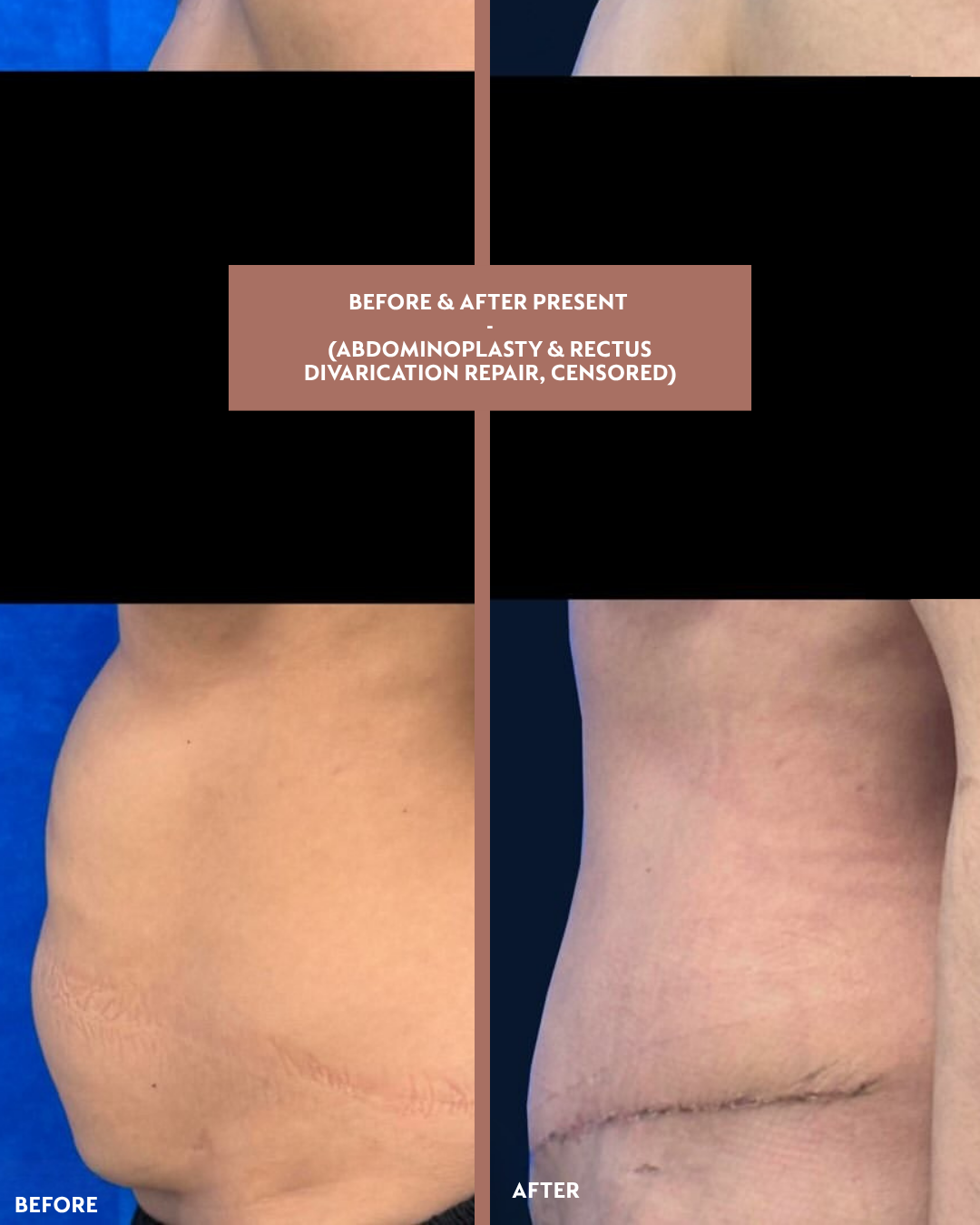
Results
An immediate improvement in abdominal contour is visible after surgery, though swelling and bruising take time to settle. Final results become apparent by 3–6 months, with continued refinement for up to a year. Scars fade significantly and are positioned to be hidden beneath underwear or swimwear.
BOOK CONSULTATIONWhat To Expect
PRICE:
Pricing provided following an initial consultation
TIME:
2–3 hours (may be longer if combined with liposuction or other procedures)
PAIN:
Moderate; well managed with prescribed medication; discomfort is most notable in the first 1–2 weeks, particularly where muscles have been tightened
RECOVERY:
Overnight stay in hospital required; 2-3 weeks off work; 6 weeks before resuming strenuous activity and heavy lifting; compression garment worn throughout recovery.
AREAS:
Abdomen (lower, upper, and flanks depending on type)
FREQUENCY:
A one-time procedure; results are long-lasting with stable weight
How Does It Work
Abdominoplasty is performed under general anaesthetic. A low-placed horizontal incision is made across the lower abdomen, just above the pubic hairline. Through this incision, excess skin and fat are removed. Where necessary, the underlying abdominal wall muscles are tightened with sutures (repairing diastasis recti). The belly button is repositioned if required. The incision is closed with sutures and a compression garment is applied. There are several types: a standard/full abdominoplasty addresses above and below the navel; a mini tummy tuck targets the lower abdomen only with a shorter incision; and a Fleur-de-Lys abdominoplasty addresses excess tissue in the flanks and upper abdomen with an additional vertical incision. Liposuction is often combined for enhanced contouring.
Frequently Asked Questions
What Are The Benefits?

- Flatter, firmer abdominal contour
- Removal of excess skin folds after weight loss or pregnancy
- Repair of abdominal muscle separation (diastasis recti)
- Improved core support and posture for some patients
- Enhanced confidence in clothing and swimwear
What complementary treatments are available?
- Liposuction — to sculpt surrounding areas such as flanks or hips
- Breast lift or augmentation — as part of a “mummy makeover”
- Scar treatments — to help fade incision marks
- Medical skin tightening — to enhance or maintain results
- Lymphatic massage — to aid in post-operative swelling reduction
What is the post-treatment advice?
- Wear compression garment as instructed (typically 6 weeks)
- Take prescribed medications for pain and infection prevention
- Walk gently as advised to prevent blood clots
- Avoid heavy lifting and strenuous activity for 6 weeks
- Sleep with upper body slightly elevated
- Arrange manual lymphatic drainage as instructed
- Attend all follow-up appointments
What are the risks?
Risks include infection, poor wound healing, abnormal scarring (hypertrophic or keloid), seroma, asymmetry, cosmetic dissatisfaction, abdominal numbness (usually temporary), umbilical necrosis (rare), blood clots (DVT/PE), and chest infection. Smoking significantly increases complication risk. All risks are discussed during consultation.
What CAN I EXPECT?
- Immediate improvement in abdominal contour
- Swelling and bruising settle over several weeks
- Scars positioned below the bikini line; they fade significantly but do not disappear completely
- Final result by 3–6 months with continued refinement for up to a year
Who is this treatment unsuitable for?
- Patients planning future pregnancies (pregnancy can reverse the results)
- Those who are not at a stable weight (should be stable for at least 6 months)
- Active smokers (must stop at least 6 weeks before and after)
- Patients seeking weight loss (abdominoplasty is body contouring, not weight loss surgery)
- Those with uncontrolled medical conditions
Schedule A Consultation
BOOK CONSULTATION