
Breast Reduction (Mammoplasty)
A breast reduction (mammoplasty) is a surgical procedure that simultaneously reduces the size of and lifts and reshapes large breasts, relieving physical symptoms and achieving a more proportionate, comfortable figure.
- Reduces breast volume to a size desired by the patient, improving body proportion
- Relieves physical symptoms of excessively large breasts including neck/back pain and shoulder strap grooving
- Lifts and reshapes the breasts with improved nipple position for a youthful, natural result
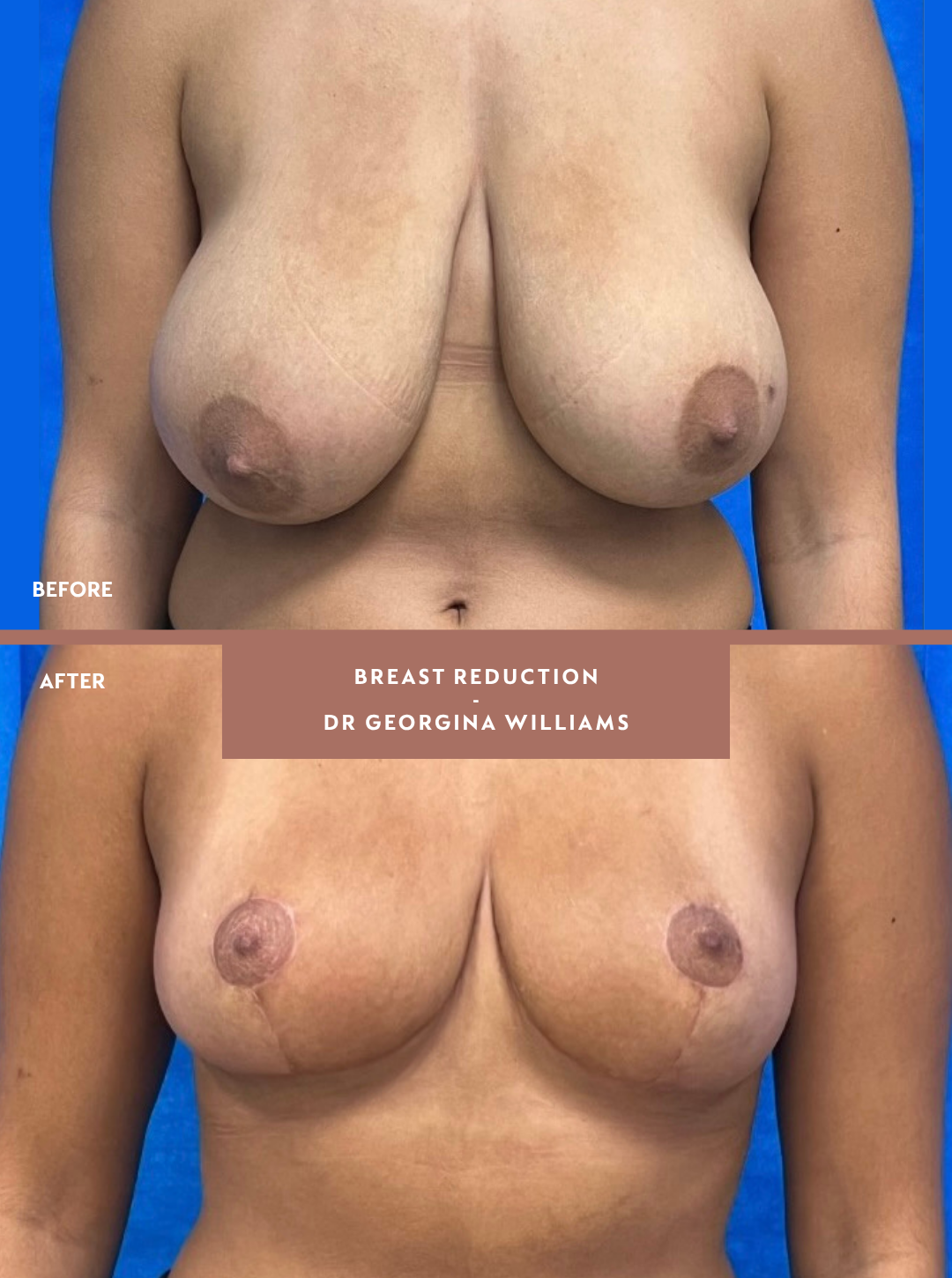


Results
Results are visible immediately, although swelling and bruising obscure the final outcome for several weeks. As healing progresses, the breasts settle into their new shape and position, revealing a natural, rejuvenated contour. Final results are typically apparent by 3–6 months.
BOOK CONSULTATIONWhat To Expect
PRICE:
Pricing provided following initial consultation
TIME:
2–3 hours
PAIN:
Mild to moderate; well managed with prescribed medication; most patients feel significantly more comfortable within a few days
RECOVERY:
Routinely performed as a day case, 1–2 weeks off work (desk-based); up to 6 weeks for physically demanding roles; avoid heavy lifting and upper body exercise for 6 weeks.
AREAS:
Breasts
FREQUENCY:
A one-time procedure with long-lasting results
How Does It Work
Breast reduction is performed under general anaesthetic or local anaesthetic with sedation. Preoperative surgical markings guide precise incision placement. Strategic incisions are placed around the areola and extend vertically downward (lollipop shape) or in an anchor pattern, depending on the degree of reduction required. Excess skin and breast tissue are removed, leaving the nipple-areola complex on a healthy pedicle to preserve blood supply. The nipple-areola complex is raised to a preplanned, youthful position and the remaining breast tissue is reshaped. All removed tissue is sent for laboratory examination as a precaution. The skin is closed with buried dissolving sutures and a supportive surgical garment is applied.
Frequently Asked Questions
What Are The Benefits?

- Reduced breast size, improved shape, and youthful nipple-areola position
- Correction of breast asymmetry where applicable
- Relief from neck pain, back pain, shoulder strap grooving, and skin disorders under the breasts
- Long-lasting, confidence-boosting results
- Improved comfort in clothing and during physical activity
What complementary treatments are available?
- Liposuction — to refine body proportions and complement the new breast shape
- Abdominoplasty (tummy tuck) — often combined for post-pregnancy body contouring
- Fat transfer augmentation — for minor adjustments or contouring
- Non-surgical skin tightening — to improve skin elasticity
What is the post-treatment advice?
- Wear a supportive surgical bra continuously for the recommended duration
- Avoid strenuous activities, heavy lifting, and upper body exercise for 6 weeks
- Sleep on your back to reduce pressure on the breast
- Keep incisions clean and follow wound care instructions meticulously
- Attend all scheduled follow-up appointments
- Contact your surgeon if you experience unusual swelling, pain, or signs of infection
What are the risks?
Risks include bleeding, infection, poor wound healing, abnormal scarring (hypertrophic or keloid), changes in nipple sensation, asymmetry, the potential need for revision surgery, and very rarely nipple-areola complex compromise. Bottoming out (descent of breast tissue over time) can occur, particularly in patients with heavy tissue or weak skin — Galaflex mesh may be used in select cases to help prevent this. All risks are discussed in detail during consultation.
What CAN I EXPECT?
- Immediate recovery: Swelling, bruising, and tightness around the breasts for the first few days
- First 1–2 weeks: Gradual return to light activities; driving may resume at week 3–4
- Beyond 6 weeks: Heavy lifting and normal exercise can resume
- 3–6 months: Final results become fully apparent, scars soften and fade
Who is this treatment unsuitable for?
- Active smokers (must stop 6 weeks before and after)
- Those with unrealistic expectations
- Patients with uncontrolled medical conditions
Schedule A Consultation
BOOK CONSULTATION